






Royalties: A Complete Guide to How Artists Earn Money From Music
Royalties are the backbone of income in the music industry. If you’re creating music, understanding how royalties work isn’t optional—it’s essential. Many artists miss out on money simply because they don’t know what they’re entitled to or how to collect it. A well-structured royalty strategy can turn a single song into long-term, recurring income.
What Are Music Royalties?
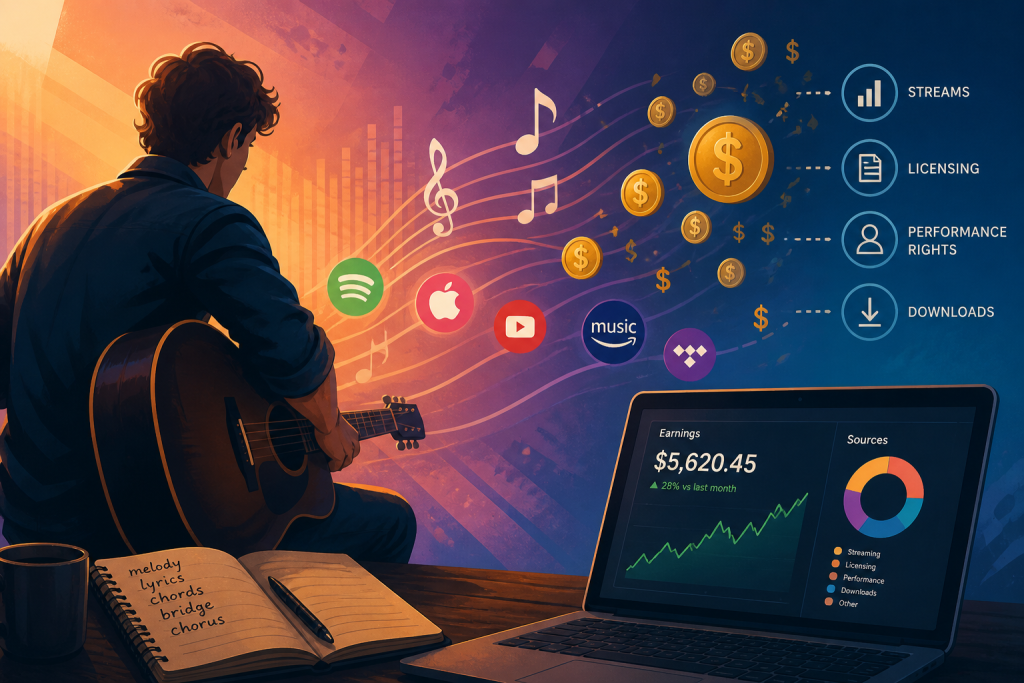
Music royalties are payments made to rights holders whenever a song is used, performed, or distributed. These rights holders can include songwriters, composers, performers, producers, and record labels.
Whenever your song is streamed, played on the radio, used in a film, or performed live, someone owes you money. The challenge is knowing who pays what—and making sure you’re registered to receive it.
Types of Music Royalties
1. Mechanical Royalties
Mechanical royalties are earned when your music is reproduced or distributed. This includes physical sales (CDs, vinyl) and digital streams on platforms like Spotify and Apple Music.
Every time someone streams your song, a small portion goes to the songwriter and publisher as a mechanical royalty.
2. Performance Royalties
Performance royalties are generated whenever your music is played publicly. This includes radio airplay, live performances, TV broadcasts, and even background music in public spaces.
Organizations like ASCAP, BMI, and PRS for Music collect these royalties on behalf of artists and distribute them accordingly.
3. Sync (Synchronization) Royalties
Sync royalties are earned when your music is used in visual media—films, TV shows, advertisements, or video games.
A single sync placement can be highly lucrative. For example, getting your song featured in a popular Netflix series or a major brand commercial can generate upfront fees plus ongoing royalties.
4. Streaming Royalties
Streaming royalties are often misunderstood. Platforms like YouTube and Spotify pay rights holders based on total streams, subscription revenue, and ad revenue.
The payout per stream may seem small, but it scales with volume. Millions of streams can translate into significant income—especially when combined with other royalty types.
5. Print Royalties
These are earned from sheet music sales. While less common today, they still matter in certain genres like classical music and educational publishing.
Who Gets Paid?
Royalty splits can get complicated quickly. Here’s a simplified breakdown:
- Songwriters & Composers – Earn from publishing (mechanical + performance royalties)
- Artists/Performers – Earn from recordings (streaming, sales, live shows)
- Producers – Often receive a percentage of royalties (points)
- Publishers & Labels – Take a share depending on contracts
If you don’t have clear agreements in place, you risk disputes—or worse, lost income.
How to Collect Your Royalties
Earning royalties is one thing—collecting them is another. You need to be properly registered across multiple systems:
- Join a Performing Rights Organization (PRO) like ASCAP or BMI
- Use a distributor (e.g., DistroKid, TuneCore) to get your music on streaming platforms
- Register your songs with publishing administrators
- Track your streams and usage data
Missing even one step can mean leaving money on the table.
Common Mistakes Artists Make
- Not registering their songs properly
- Ignoring publishing rights
- Signing bad contracts without understanding splits
- Relying on one income stream (usually streaming only)
A lot of artists assume their distributor handles everything—it doesn’t. Distribution is just one piece of the puzzle.
How to Maximize Your Royalty Income
- Release music consistently to build streaming volume
- Pitch your songs for sync opportunities
- Collaborate strategically to expand reach
- Build a global audience (royalties scale internationally)
- Monitor your data and optimize based on performance
Think of royalties as a long-term asset. A single song can keep paying you for years—sometimes decades.
No Comment! Be the first one.